 Faculty of Art
The Urban Ethnographic Field School (originally called the Immigrant Vancouver Ethnographic Field School) was established in 2010 by Professors Jennifer Chuong in Sociology and Alexia Bloch in Anthropology. Each year the focus of the Field School continues to expand beyond a concern with the experiences of recent immigrants in Vancouver to include student engagement with the city’s many vibrant communities and neighbourhood-based organizations.
In recent years, classes have also included a variety of field trips relevant to course readings and discussions, such as Insite, Vancouver's legal safe drug injection site, and a neighbourhood walk of historical sites of sex work and prostitution, led by Jamie Lee Hamiton and Professor Becki Ross.
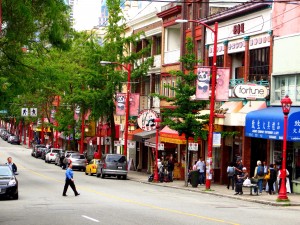
Janice Wu
Cohort: Summer Term 2017
Placement: Gordon Neighbourhood House
As a third year student going into fourth year, UEFS provided me with a great opportunity to connect with the community on a different level. It allowed me to reach out to communities and organizations in Vancouver which I would not have been aware of. The best part of UEFS was that we all grew together within the six weeks, creating valuable bonds between our community partners and the peers that we were learning with. Plus, it was a fun way to earn six credits within six weeks! At my placement, Gordon Neighbourhood House, I actively partook in growing crops and selling locally grown food to the downtown West End community. Since, I don’t live in that area, it was an eye opening experience to know how a neighbourhood house runs, which principles run the place, and how similar organizations can positively (or negatively) influence or affect the community members in the area. Overall, this class taught me to think, analyze, observe, and share in a new perspective. It was an invaluable experience for me.
Veronica Cho
Cohort: Summer Term 2017
Placement: Atira Women's Resource Society
UEFS was an amazing experience. It was an opportunity to be truly hands-on with my sociological education, in the sense that we were learning theories inside the classroom and applying them in our community placements. After the six-week course was over, I continued to volunteer at my placement. The value of fostering connections in the community, professors and students was invaluable and I would recommend applying to this program for any student who is interested.
Sarah Raven, Create-a-Comic
Mallory McMahon, Button Blankets
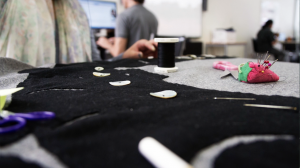
Victoria Ord, CAPC Conference
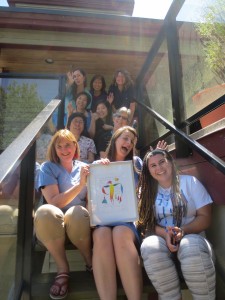
Selenna Ho, The Journal of Undergraduate Ethnography
UEFS 2014 alumna Selenna Ho's final paper received publication in issue 5:2 of The Journal of Undergraduate Ethnography! Click here to read her work.
Jessie Tougas, SOJOURNERS: Undergraduate Journal of Sociology
"Learning by Doing Good" is an interactive StoryMap researched and created by Field School alumnus Sophie Roth. The StoryMap provides a snapshot of the work of students in the Summer 2021 cohort of the UEFS. The full-page version of the StoryMap, can be found here.
"Field Work" is a UEFS podcast hosted by Field School alumnus Bryan Leung. Every episode of the series provides insight into different aspects of the UEFS' past and present through interviews with members of the field school.
Episode 1: Kerry Greer. Listen here.
So what the heck is UEFS all about and what exactly is "ethnography"? This podcast features Kerry Greer - UEFS Instructor and Lecturer in the Department of Sociology at UBC. Kerry provides insight into why UEFS is such a unique course for students and how it will benefit them in their academic career. She also explains to us, what exactly an "ethnography" is and why it's so important to have in your toolkit as a student and researcher.
Episode 2: Amir Shiva. Listen here.
Covid-19 has changed our lives forever and it also has changed how UEFS, which is usually a course offered in person at the UBC Learning Exchange in Chinatown, has been delivered in the past 2 years. Amir Shiva - previous UEFS Instructor and Lecturer in the Department of Anthropology at UBC - joins us today to talk about how UEFS has adjusted to being online. We also talk about what exactly a "digital ethnography", how it has been introduced to students, and whether this kind of methodology will be used more in future research due to the pandemic changing how research is done in the social sciences.
Episode 3: Pat Moore. Listen here.
Food insecurity has become a top of mind issue especially during the COVID-19 pandemic. Pat Moore - Associate Professor in the Department of Anthropology at UBC and UEFS Instructor joins us today to talk about how the UEFS Course interacts with the topic of food insecurity and how students contribute with assisting community organizations with their missions.
Episode 4: TomKemple. Listen Here.
UEFS has a rich history with community involvement. The program has learned and adapted itself with community input into how the program should be structured, so that it does not replicate the historically extractive relationship academic institutions have with communities. Tom Kemple - Professor in the Department of Sociology at UBC and UEFS Instructor joins us today to talk about this storied history with the creation of the program to its present day standing.